Rudyard Kipling's If
 peaceoneday.org
Many have written or talked about how Rudyard Kipling’s poem “If” has impacted their life, for the better. It’s an inspirational poem, wise words shared from a father to his son. I’m a fan too. Yet there are some aspects of the poem that I’d like to push against.
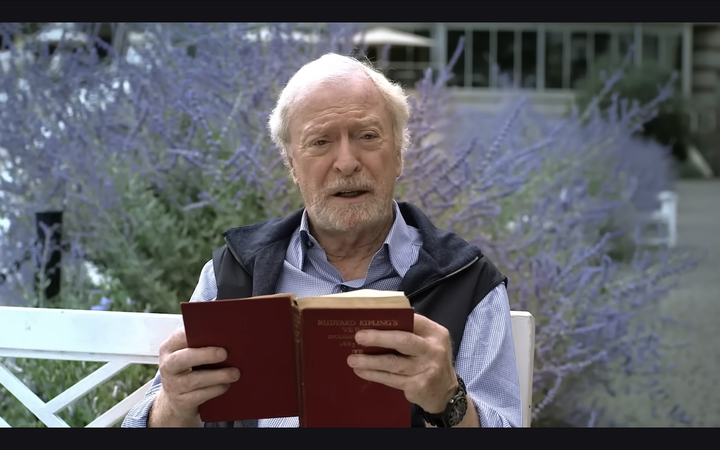
I’ve gone through many different performances of the poem on YouTube, but the one I enjoyed the most was Sir Michael Caine’s rendition, especially because he also discusses how the poem has impacted his life.
Caine’s reading of the poem is below. The poem itself is further below on the left, and some of my annotated commentary on the right. My full discussion of the poem, including and a (fortuitous?) mistake in Caine’s reading, are at the end.
| Rudyard Kipling's If | Vahid's In-line Interpretation |
|---|---|
|
If you can keep your head when all about you Are losing theirs and blaming it on you; If you can trust yourself when all men doubt you, But make allowance for their doubting too; If you can wait and not be tired by waiting, Or being lied about, don't deal in lies, Or being hated, don't give way to hating, And yet don't look too good, nor talk too wise: |
Stay calm while others panic and blame you. Have faith in your own judgment, But be humble enough To understand why some may doubt you Be patient without frustration Stay honest even when lied to Don't become bitter when hated Stay modest; don’t brag about your virtue |
|
If you can dream—and not make dreams your master; If you can think—and not make thoughts your aim; If you can meet with Triumph and Disaster And treat those two impostors just the same; If you can bear to hear the truth you've spoken Twisted by knaves to make a trap for fools, Or watch the things you gave your life to, broken, And stoop and build ’em up with worn-out tools: |
Have aspirations, but don't let them control you Use reason, but allow yourself to transcend thinking Face both success and failure calmly Realize both are temporary illusions Accept that your words will be twisted by others To further their own goals And that your hard work will get destroyed; Just start over with determination even when exhausted |
|
If you can make one heap of all your winnings And risk it on one turn of pitch-and-toss, And lose, and start again at your beginnings And never breathe a word about your loss; If you can force your heart and nerve and sinew To serve your turn long after they are gone, And so hold on when there is nothing in you Except the Will which says to them: 'Hold on!'; |
Be willing to risk everything you have earned Take some brave, all-or-nothing risks Accept loss without complaint, and just reset Don’t whine about your setbacks, nor blame others Push yourself physically and mentally beyond limits Keep going even when your strength is gone Persevere even when completely depleted Even when willpower is the only thing you have left |
|
If you can talk with crowds and keep your virtue, Or walk with Kings—nor lose the common touch; If neither foes nor loving friends can hurt you; If all men count with you, but none too much; If you can fill the unforgiving minute With sixty seconds' worth of distance run, Yours is the Earth and everything that's in it, And—which is more—you'll be a Man, my son! |
Do not get caught in mob mentality Hold your own among kings, but remember your roots Don't be overly affected by enemies or friends Value everyone, but don't become dependent on anyone Use every minute fully and wisely Make the most out of every moment If you can do this, you will succeed greatly in life Above all, you’ll have true maturity and character. |
Comments
Of course, it’s Michael Kaine reading, so it’s gold. He does make several mistakes here and there, but most are minor and don’t impact the poem that much.
But the mistake at the end is actually quite interesting. The Kipling original line is:
With sixty seconds' worth of distance run
Michael Kaine, however, reads it as “With fourty seconds of distance run”. Initially, it’s kind of funny, as in, come on Michael, you had one job to do.
But this ironically actually addresses the main complaint I have with this poem. It’s too stereotypically masculine, too rigid, too demanding.
It’s ok to feel not good enough. It’s ok to feel so lost and so hurt that you cry tears of pain. Crying is powerfully regenerative. Healing is organic, not static.
It’s ok to not fill every minute with 60 seconds of distance run. You are not a robot.
I actually prefer Michael’s version: even if you fill 40 seconds of every minute, you have already achieved more than most.
Aside from the above (significant) caveat, I do like the poem as well. There’s a cadence and wisdom behind much of it. It flows. It does appear to be wise words from a father to a son. There are some important life lessons there.
Vahid Dejwakh
Software Engineer at Microsoft;
Lover of good music and poetry
Vahid writes about interesting ideas at the intersection of software, system design, data, philosophy, psychology, policy, and business. He enjoys coffee and has a palate for spicy and diverse foods.